
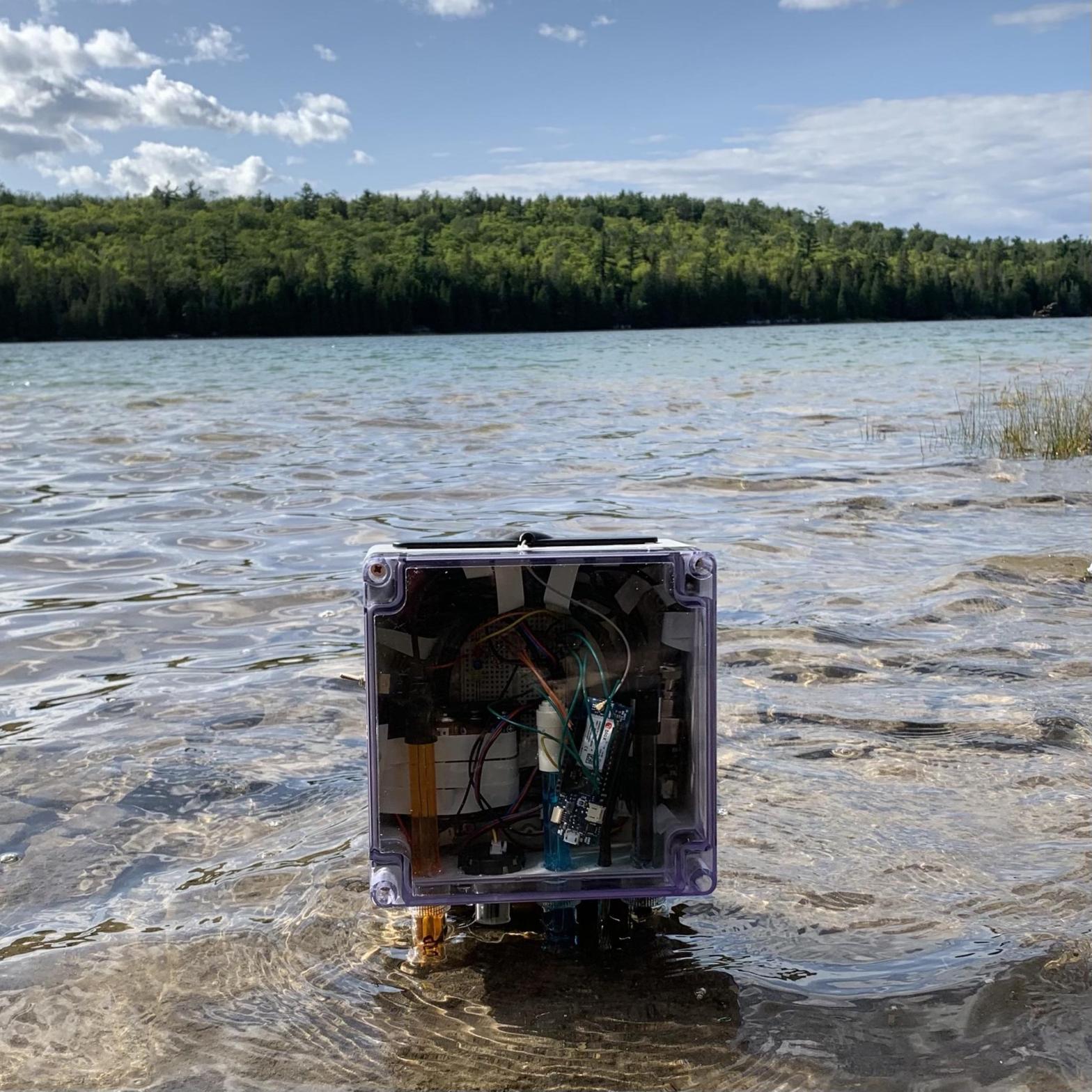
After a couple months, H2OSupport’s first prototype has ultimately been finalized. The device’s main features are to collect interesting water quality readings (at home or on the field), evaluate them both individually and as a whole as well as display and save the data online. The project also implements handy online alerts that notify the user if the water quality is unhealthy.
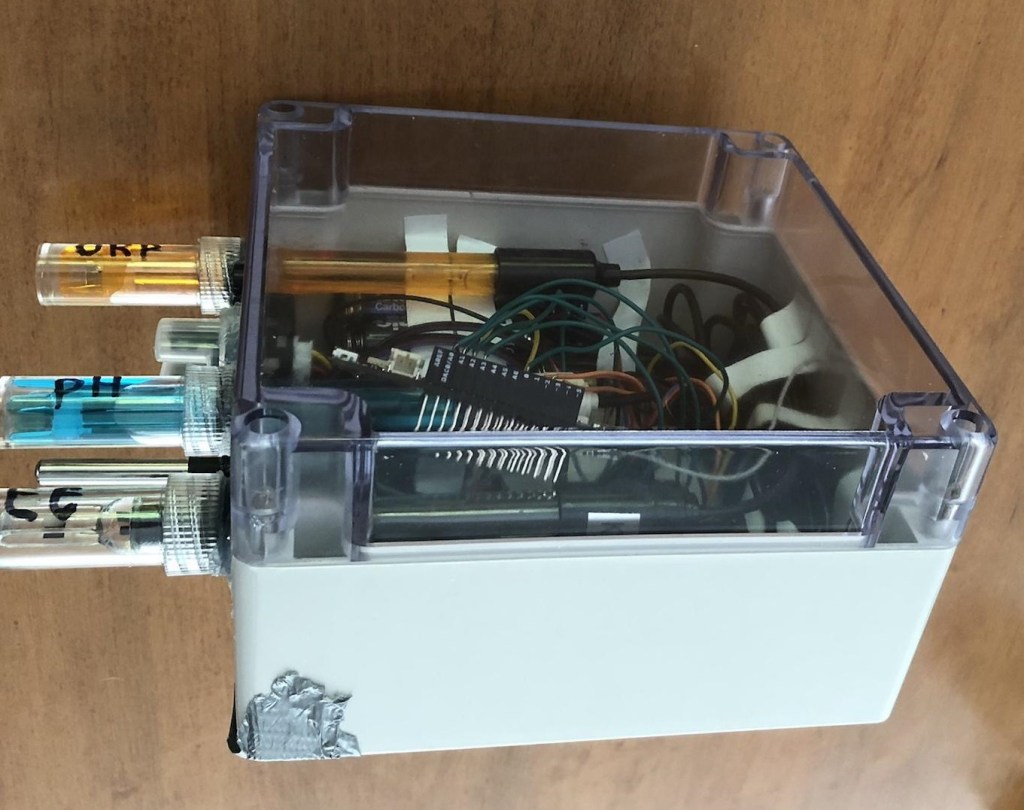
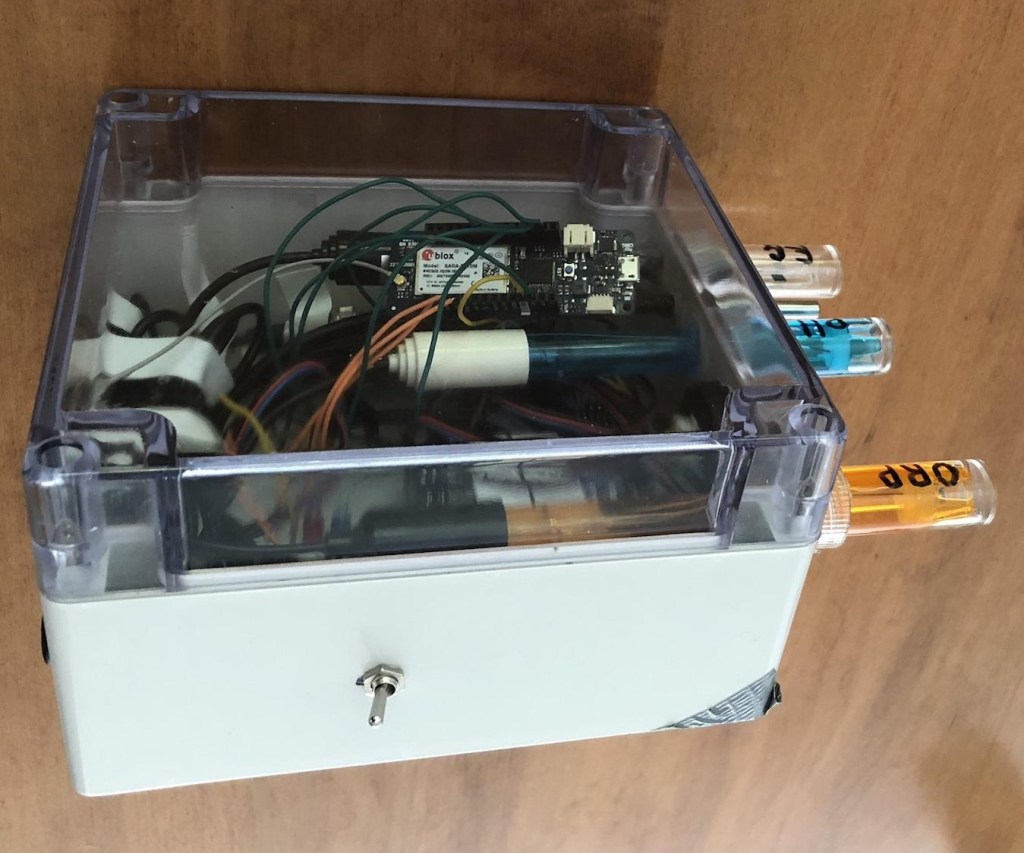
The device can be turned on by a simple flick of the toggle switch that juts out of the left-hand side. Three LEDs are located inside the box, a bit to the left, colored red, blue and yellow. Each has an important purpose.
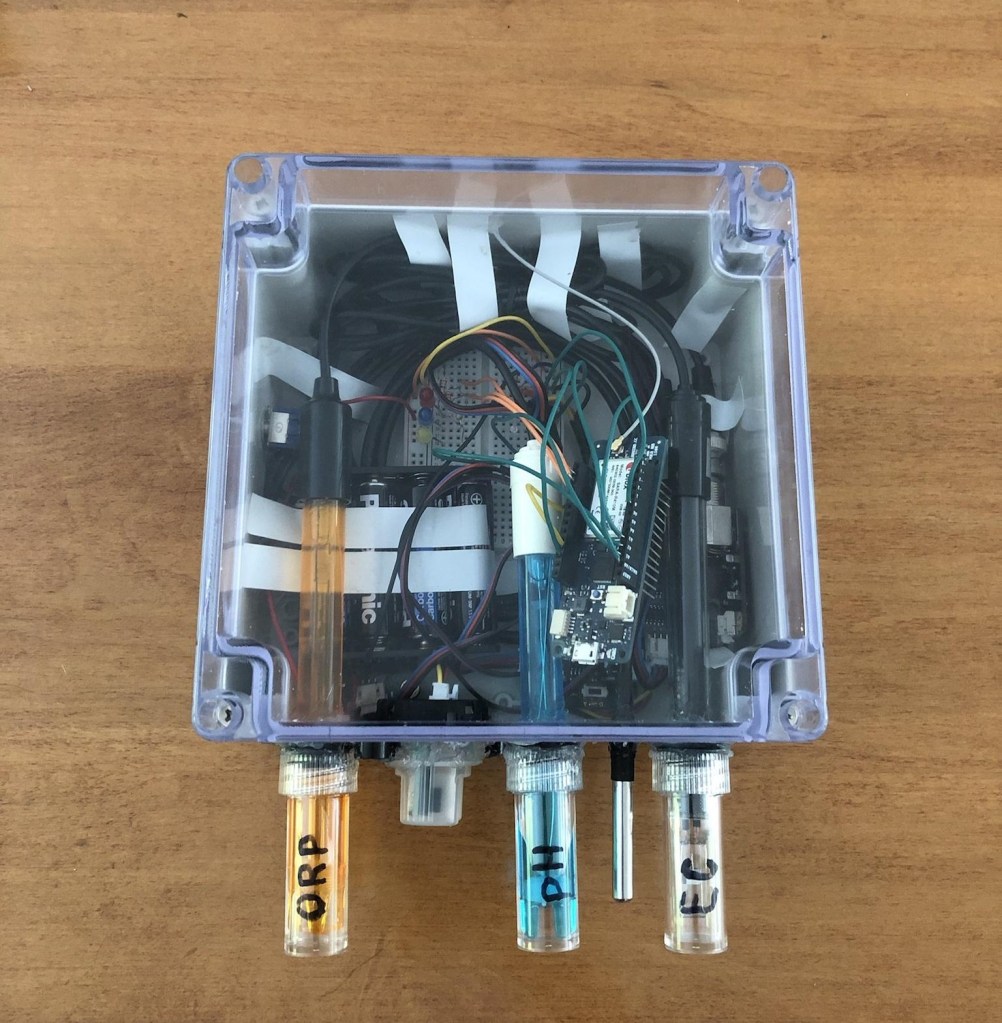
Once turned on, the red LED activates, indicating that the device is currently connecting to a cellular network (~10s). The second blue LED activates once the device is connected and is now taking water quality readings from each sensor (40s). The final yellow LED activates once the device has finished taking readings and is now parsing and sending the data through the cellular network (~10s). The device can now be turned off. The whole process takes around a minute.
H2OSupport is powered by four standard AA batteries which supply 1.5V each. The device therefore receives 6V in total. These batteries can typically supply at least the required 5V for about three hours of constant usage, depending on the manufacturer and age of the batteries. Therefore, since one cycle of readings takes around a minute, H2OSupport can provide ~180 uses before the batteries aren’t able to power it anymore and have to be changed.
As a final note, here are some typical values for healthy lake/river water that you can expect (sourced within this project):
- ORP: Between 300-500 mV
- pH: Between 6.0-8.5
- EC: Below 1000 µS/cm
- Turbidity: Relative
- Temperature: Relative
Generally, if the ORP is high, the water is healthy, as it has a lot of oxygen in reserve to break down contaminants and dead tissue, keeping it clean. However, if the ORP value keeps growing over time, the water will eventually be prone to unwanted living beings, such as harmful algae or other invasive species. On the other hand, an ORP value that is too low (usually below 300 mV) means that there’s not enough oxygen for wildlife to survive, therefore bacteria and contaminants can take over.
The pH value of freshwater should definitely be above 6.0, however some lakes and rivers drop to around that value naturally, hence the reason why it is included in the “healthy” range. Acidic bodies of water (below pH-6.0) can cause real problems for aquatic living beings, like weakening of bones and eggs. It can also reduce oxygen intake for species with gills, making it harder for them to survive. Human contamination is the most common cause for freshwater’s pH to rise. If the pH reaches 8.5, unwanted algae can bloom, take over, and suffocate the water’s inhabitants.
Talking about electricity in a lake or river might seem strange, but EC is a very helpful value that can determine the water quality when paired with other water parameters. EC is a value that should always remain low. If EC is high and turbidity is high, it generally means that the body of water contains quite a few contaminants. If EC is high and pH is either above or below its normal values, it usually means there’s a high presence of salt. EC is higher in the summer because the water evaporates more, which means the volume of water lowers, therefore the concentration of salt rises.
Finally, the turbidity and temperature values are too relative to many factors such as the time of day, location in the water of the readings and more, such that it would be too subjective to give a range of “healthy” values for these two parameters. Additionally, these are the only two values that are not helpful on their own in determining water quality.
| ORP- | ORP+ | pH- | pH+ | EC- | EC+ | Turb.- | Turb.+ | |
| ORP- | — | — | Cont. | Cont. | ||||
| ORP+ | — | — | Cont. | Cont. | ||||
| pH- | Cont. | — | — | Salt | ||||
| pH+ | Cont. | — | — | Salt | Cont. | |||
| EC- | — | — | ||||||
| EC+ | Salt | Salt | — | — | Cont. | |||
| Turb.- | — | — | ||||||
| Turb.+ | Cont. | Cont. | Cont. | Cont. | — | — |

 H2OSupport