
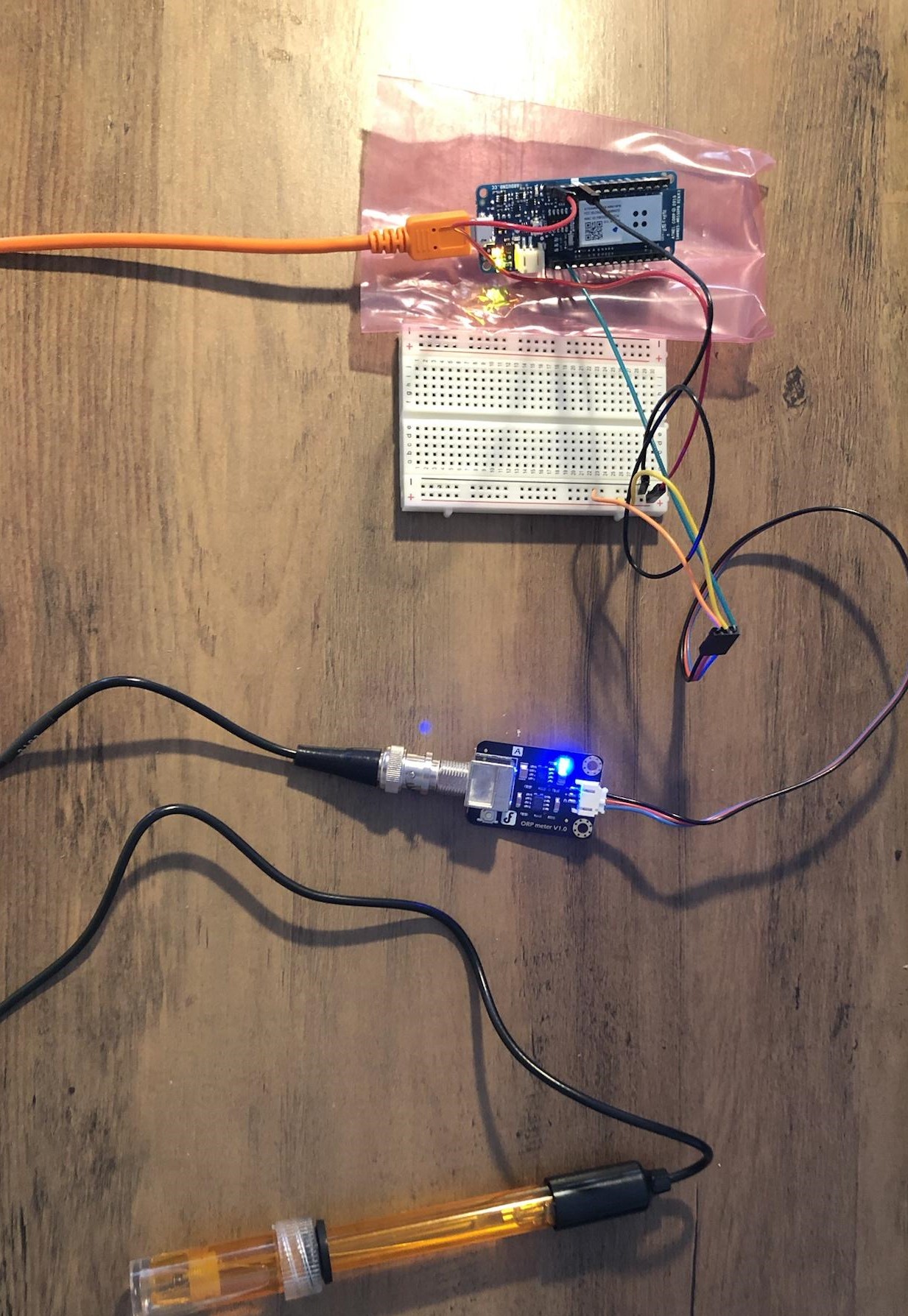
I kept this sensor for last, as I think ORP is the most complicated concept to grasp. In a few words, the meter measures the potential for oxidation in a solution in millivolts. In general, when pH is low, ORP is high, and when pH is high, ORP is low. Here is the setup:
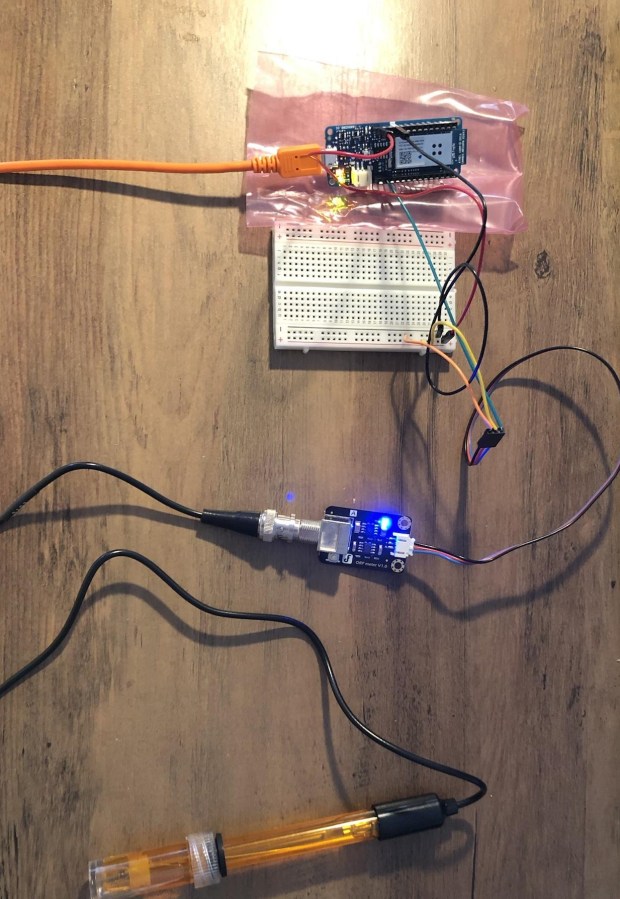
This time we can use DFRobot’s script to “calibrate” the ORP sensor since there are no libraries used that are exclusive to AVR boards. You can find the sample code and calibration instructions here. To calibrate the probe, leave it in the neutral solution and connect it to the Arduino. Run the script, then hold down the calibration button on the Grove connector board (comes with the sensor). The value on the serial monitor should be very small, remember it. Head back to the code and change the OFFSET value from 0 to whatever value you just saw on the serial monitor. Your probe should now be calibrated to the neutral solution.
Healthy drinking water should read atleast 650 mV [1], and healthy lake water around 300 mV to 500 mV [2]. With ORP, usually higher is better. The higher the ORP, the more oxygen there is and the better the body of water is able to cleanse itself. As an example, a pool with a high ORP value means that the sanitizer being used is effective.
On a side note, the readings on the ORP meter I ordered are very sporadic. I don’t know if it’s because the sensor is damaged or because the sensor was never correctly calibrated. In any case, I don’t think it would be relevant to measure quantity, but rather quality. In other words, I most likely won’t be interested in the readings one by one, but rather many readings, to see how the ORP values for a specific body of water vary over time.
Sources
[1] Government of New South Wales, “Oxidation-Reduction Potential”, November 14th 2016. [Online]. Available: https://www.health.nsw.gov.au/environment/factsheets/Pages/orp.aspx#:~:text=Drinking%20water%20is%20adequately%20disinfected,of%20chloramines)%20where%20conditions%20permit
[2] Government of Northwest Territories, “Oxidation Reduction Potential (ORP)”. [Online]. Available: https://www.enr.gov.nt.ca/sites/enr/files/oxidation-reduction_potential.pdf

 H2OSupport